DINP: Uses, Safety, and Regulatory Overview
Flexible PVC applications span from wire insulation to automotive interiors, and nearly all depend on plasticizers to achieve their performance characteristics. Diisononyl phthalate (DINP) has served as a primary plasticizer in industrial manufacturing for decades, supporting applications where flexibility, durability, and regulatory compliance intersect.
Understanding DINP’s properties, regulatory status, and sourcing considerations helps manufacturers and procurement teams make informed material decisions. This guide covers the technical specifications, applications, and supply chain strategies essential for industrial DINP users.
What Is DINP and Why Is It Used as a Plasticizer?
Diisononyl phthalate (DINP) is a phthalate ester plasticizer that makes polyvinyl chloride (PVC) flexible and workable. A plasticizer is a chemical additive that reduces the rigidity of polymers, allowing them to bend without breaking. DINP has been extensively studied and used in industrial applications for decades.
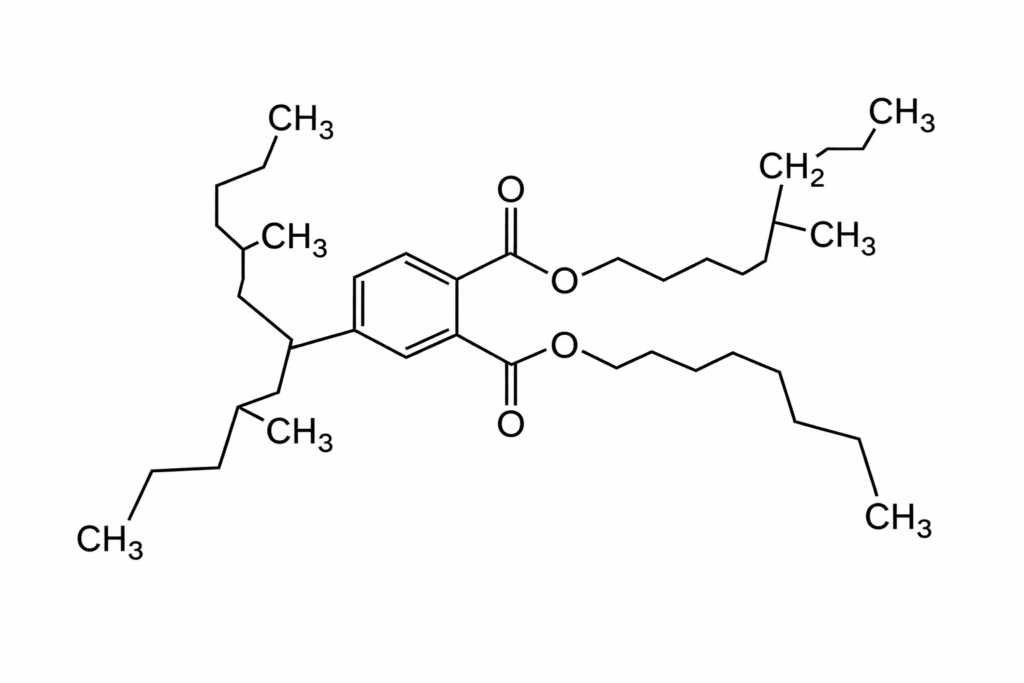
Chemical Structure and Molecular Formula of Diisononyl Phthalate
DINP is an ester formed from phthalic acid and isononyl alcohol, with the molecular formula C26H42O4. Rather than being a single compound, diisononyl phthalate is actually a mixture of isomers, which are molecules with the same formula but different structural arrangements.
CAS Numbers and Common Synonyms for Isononyl Phthalate
The primary CAS registry numbers for DINP are 28553-12-0 and 68515-48-0. Common synonyms include:
- Di iso nonyl phthalate: Alternative spelling
- Isononyl phthalate: Shortened form
- 1,2-benzenedicarboxylic acid diisononyl ester: IUPAC chemical name
How DINP Functions in Flexible Plastic Formulations
DINP works by embedding between PVC polymer chains, reducing intermolecular forces and allowing the material to flex. The DINP chemical offers good permanence, meaning it resists migration out of the plastic over time.
Industrial Applications for DINP Plasticizer
DINP is a high-volume industrial chemical used across multiple sectors where flexible vinyl performance is required.
Flexible PVC and Vinyl Products
DINP serves as the primary plasticizer in general-purpose flexible PVC applications. Common products include hoses, tubing, and flexible vinyl goods used in manufacturing.
Wire and Cable Insulation
Electrical wire and cable manufacturers use DINP in jacketing materials where flexibility and durability are essential. The DINP plasticizer maintains performance across temperature variations common in electrical applications.
Flooring and Wall Covering Materials
Vinyl flooring, sheet goods, and wall coverings incorporate DINP to provide workability during installation. The plasticizer helps these materials resist cracking over years of use.
Automotive Interior Components
Automotive manufacturers use DINP in dashboard skins, door panels, and upholstery. The plasticizer maintains flexibility in both hot and cold conditions typical of vehicle interiors.
Coated Fabrics and Flexible Film
Applications include:
- Tarpaulins for outdoor use
- Synthetic leather products
- Flexible film for industrial applications
DINP Regulatory Framework and Compliance Overview
DINP is regulated under multiple frameworks globally. Manufacturers must understand applicable requirements for their specific applications and markets.
DINP is regulated under multiple chemical management frameworks worldwide, requiring manufacturers to align use and labeling with application-specific and regional requirements. Following extensive scientific review by regulatory authorities, DINP has been affirmed as acceptable for use in its intended application.This outcome follows years of comprehensive study and formal evaluation, reinforcing DINP’s standing as a compliant, predictable plasticizer within regulated flexible PVC markets.
EPA TSCA Risk Evaluation Findings
The U.S. Environmental Protection Agency evaluated DINP under the Toxic Substances Control Act (TSCA), which governs chemical manufacturing and use. The risk evaluation examined occupational and consumer exposure scenarios across various conditions of use.
California Proposition 65 Listing Requirements
DINP is listed under California Proposition 65, which requires businesses to provide warnings about certain chemical exposures. This is a labeling requirement, not a prohibition on use.
CPSC Consumer Product Restrictions
The Consumer Product Safety Commission restricts DINP concentration above certain thresholds in specific children’s toys and childcare articles. These restrictions apply to products intended for use by children under specific age ranges.
European Union and International Regulations
The European Union regulates DINP under REACH (Registration, Evaluation, Authorization, and Restriction of Chemicals). Other major markets maintain their own regulatory frameworks that manufacturers must verify.
How DINP Compares to DEHP, DIDP, and Non-Phthalate Plasticizers
Formulators evaluate multiple plasticizer options based on technical performance, regulatory requirements, and application specifications.
DINP vs DEHP Performance and Regulatory Differences
DINP has a higher molecular weight than di(2-ethylhexyl) phthalate (DEHP), resulting in lower volatility. The two plasticizers have different regulatory classifications in certain applications.
DINP vs DIDP Application Considerations
Diisodecyl phthalate (DIDP) has a longer carbon chain than DINP, providing somewhat lower volatility. DIDP is often selected for applications requiring enhanced performance at higher temperatures.
Phthalate and Non-Phthalate Plasticizer Selection
Non-phthalate plasticizers were developed to meet specific regulatory, customer, or application requirements. Options include:
- Citrates: Used in food contact applications
- Adipates: Selected for low-temperature flexibility
- Bio-based options: Developed for specific customer requirements
DINP Chemical Properties and Technical Specifications
Understanding technical specifications affects processing and end-use performance.
Physical Properties and Performance Parameters
- Appearance: Clear, oily liquid
- Molecular weight: Approximately 418 g/mol
- Specific gravity: Approximately 0.97
Compatibility with PVC Resins and Additives
DINP demonstrates strong compatibility with various PVC resin grades. It works effectively in blended systems with stabilizers, fillers, and other plasticizers.
Quality Specifications for Industrial Procurement
Typical quality parameters include purity, acid number, color, and water content. Certificates of analysis from suppliers document these specifications.
Handling, Storage, and Logistics Requirements for DINP
Proper handling ensures product quality and workplace compliance.
Safe Handling Practices in Industrial Settings
Standard practices include adequate ventilation, appropriate personal protective equipment, and avoiding prolonged skin contact. Safety Data Sheets provide detailed handling recommendations.
Optimal Storage Conditions and Shelf Life
DINP should be stored in sealed containers in a cool, dry, well-ventilated area. Proper storage maintains product quality and extends shelf life.
Transportation and Packaging Considerations
Common packaging formats include:
- Drums for smaller quantities
- IBC totes for medium-volume users
- Bulk tankers for high-volume operations
- Flexitanks for container shipments
Global Sourcing and Supply Chain Strategies for DINP
Securing reliable DINP supply requires understanding the global production landscape. Evaluating DINP suppliers involves assessing reliability and quality consistency.
Major DINP Producing Regions and Suppliers
Global DINP production occurs across North America, Europe, and Asia. Procurement teams should evaluate supplier track records and quality management systems.
Import and Export Logistics Considerations
International DINP procurement involves managing lead times and customs documentation. Container and bulk vessel scheduling affects delivery timelines.
Building Resilient DINP Supply Chains
Resilience strategies include:
- Qualified backup suppliers: Maintain relationships with multiple sources
- Strategic inventory positioning: Balance carrying costs with supply security
- Distributor partnerships: Work with partners who maintain multiple sourcing relationships
Working with an Experienced DINP Chemical Supplier
Established chemical distributors bring decades of experience in plasticizer supply and global sourcing networks. The Chemical Company maintains long-standing relationships with world-class producers and offers technical documentation support and flexible logistics solutions.
Learn more about our chemical supply and distribution solutions.